I spent three hours last week standing in front of a wall of label samples at our studio. Paper, plastic, woven, metallic, matte, glossy — fifty-seven swatches spread across the table. My colleague walked by, glanced at the chaos, and said “so… which one actually works?”
Fair question. And it’s the same question every small business owner should be asking when they start thinking about product labels.
The truth is, most people pick label materials based on two things: what looks pretty and what’s cheap. Neither of those is wrong exactly, but they’re incomplete answers. The material you choose doesn’t just affect how the label looks — it determines whether the label survives, whether customers trust your product, and whether you end up reordering six months later because the first batch didn’t hold up.
The Big Three: Paper, Plastic, and Woven
Let’s break down the three main categories, because they’re fundamentally different products trying to do fundamentally different jobs.
Paper Labels: The Workhorse
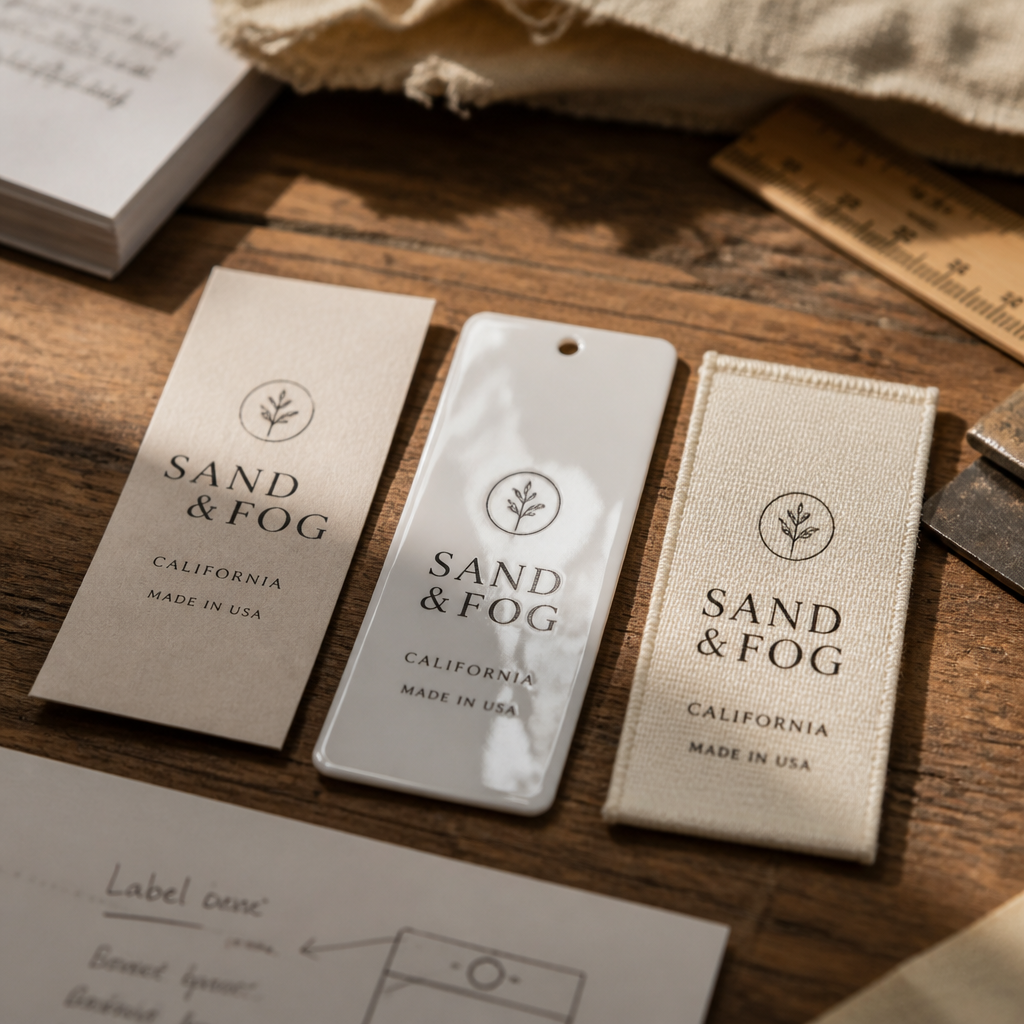
Paper labels are what most people picture when they think of a product label. They’re the matte-finished rectangle on the candle jar, the textured wrap on the craft beer bottle, the elegant tag tied to a handmade garment.
Paper wins on texture and print quality. If you want an uncoated, natural feel — something that says “artisanal” or “small-batch” without having to spell it out — paper does that effortlessly. It takes ink beautifully, especially on digital presses, and if you’re working with a designer who cares about typography at 8-point size, paper gives you the crispest results.
But paper has limits. It doesn’t love moisture, oil, or direct sunlight. A paper label on a refrigerated product is fine. A paper label on a product that lives in a steamy bathroom? That’s a problem waiting to happen. And if your product involves any kind of oil or liquid that might spill during use — think cooking oils, skincare serums, barbecue sauce — paper needs a protective coating or it’ll look stained and tired after one use.
Best for: Dry products, shelf-stable goods, apparel tags, gift packaging, premium boxes, and anything where the tactile feel matters more than durability.
Plastic Labels: The Survivor
Plastic labels — polypropylene, polyester, vinyl — are the ones that earn their keep in tough environments. They’re waterproof, tear-resistant, and don’t fade nearly as fast as paper under UV light.
If your product lives in a bathroom, a kitchen, a garage, or anywhere outdoors, you should at least consider plastic. The material cost is slightly higher than paper, but the longevity difference is dramatic. I’ve seen polypropylene labels that still looked brand-new after two years on a shower gel bottle, while the paper equivalent started peeling at the edges within three months.
Plastic also gives you more flexibility with finishes. High-gloss, clear, metallic — plastic substrates let you do things paper simply can’t. A clear plastic label on a glass bottle creates that “printed directly on the glass” look that’s so popular in premium beverage and beauty packaging right now.
The trade-off? Plastic doesn’t have the natural, tactile warmth of paper. It can feel industrial. If your brand is built around sustainability, customers may notice and ask questions. (Though recycled and bio-based plastic options are improving fast — more on that in a minute.)
Best for: Beverages, bath and body products, cleaning supplies, outdoor gear, automotive products, and anything that needs to survive moisture or frequent handling.
Woven Labels: The Heritage Choice
Woven labels are in a category of their own. They’re fabric — threads woven together into a design — and that changes everything about how they feel, how they age, and what they communicate.
There is something about a woven label on a piece of clothing that feels permanent. It’s the difference between a shirt that cost twenty dollars and a shirt someone keeps for five years. Woven labels say “this was made with intention.” They’re the quiet opposite of a screen-printed tag that cracks after ten washes.
The design constraints are real — woven labels can’t reproduce photographs or fine gradients, because you’re working with threads, not pixels. But within those constraints, they’re gorgeous. The texture, the depth, the way light catches different weaves — it’s a medium that rewards simplicity.
For garments, bags, blankets, and any textile product, woven labels are almost always the right answer. They’re also surprisingly affordable at scale, though the setup cost for a custom woven design is higher than a simple printed equivalent.
Best for: Clothing, accessories, bags, home textiles, premium soft goods, and anything where the label itself is part of the product experience.
Three Questions to Ask Before You Decide
Instead of starting with “what looks good,” start with these three questions. They’ll save you from the most common mistakes I see small businesses make.
1. Where does this product live? Is it on a shelf? In a refrigerator? In a bathroom? Outside? The environment determines the minimum durability requirement. Don’t pick a material that can’t handle the worst-case scenario.
2. How does the customer interact with it? Do they handle the label? Does it get wet during use? Is the label part of the unboxing experience, or is it just a price tag that gets thrown away? The interaction pattern tells you how much durability and texture matter.
3. What does the label need to say about the brand? This is where aesthetics and material intersect. If your brand is built around natural ingredients and sustainability, a glossy plastic label sends the wrong signal even if it’s technically the “better” choice on durability. The material is a message.
Don’t Sleep on Sustainability
The label industry has moved fast on sustainability in the last two years. Recycled paper labels with post-consumer waste content are now available at price points that don’t require a marketing budget to justify. Bio-based polypropylene — made from plant materials rather than petroleum — exists and works. Even woven labels can now be made from organic cotton or recycled polyester.
More importantly, consumers notice. A 2025 survey by the Sustainable Packaging Coalition found that 64% of shoppers under 35 actively check packaging materials for environmental claims before purchasing. If your product is targeted at that demographic, your label material choice is essentially a marketing decision, not just a production one.
The key is being honest about it. Don’t call a label “compostable” unless it actually is. Don’t imply that recycled content means carbon-neutral. Customers who care about sustainability are also the ones most likely to fact-check your claims.
Takeaway
There’s no universal “best” label material. There’s only the best material for your specific product, your specific customers, and your specific budget.
The businesses that get this right aren’t the ones with the biggest design budgets. They’re the ones who thought about it before ordering — who asked the questions up front instead of dealing with peeling labels, faded prints, and disappointed customers six months later.
Walk down any grocery aisle or browse any Etsy shop, and you can spot the difference in five seconds. The material that matches the product and the brand. The label that still looks like it belongs there, even after weeks of use.
That’s not luck. That’s a choice.
So before you order your next run of labels, spend an hour thinking about the material. Touch some samples if you can. Put them through the actual conditions your product will face. Your label is going to be in more places, for longer, than any advertisement you ever buy.
Make sure it’s up to the job.