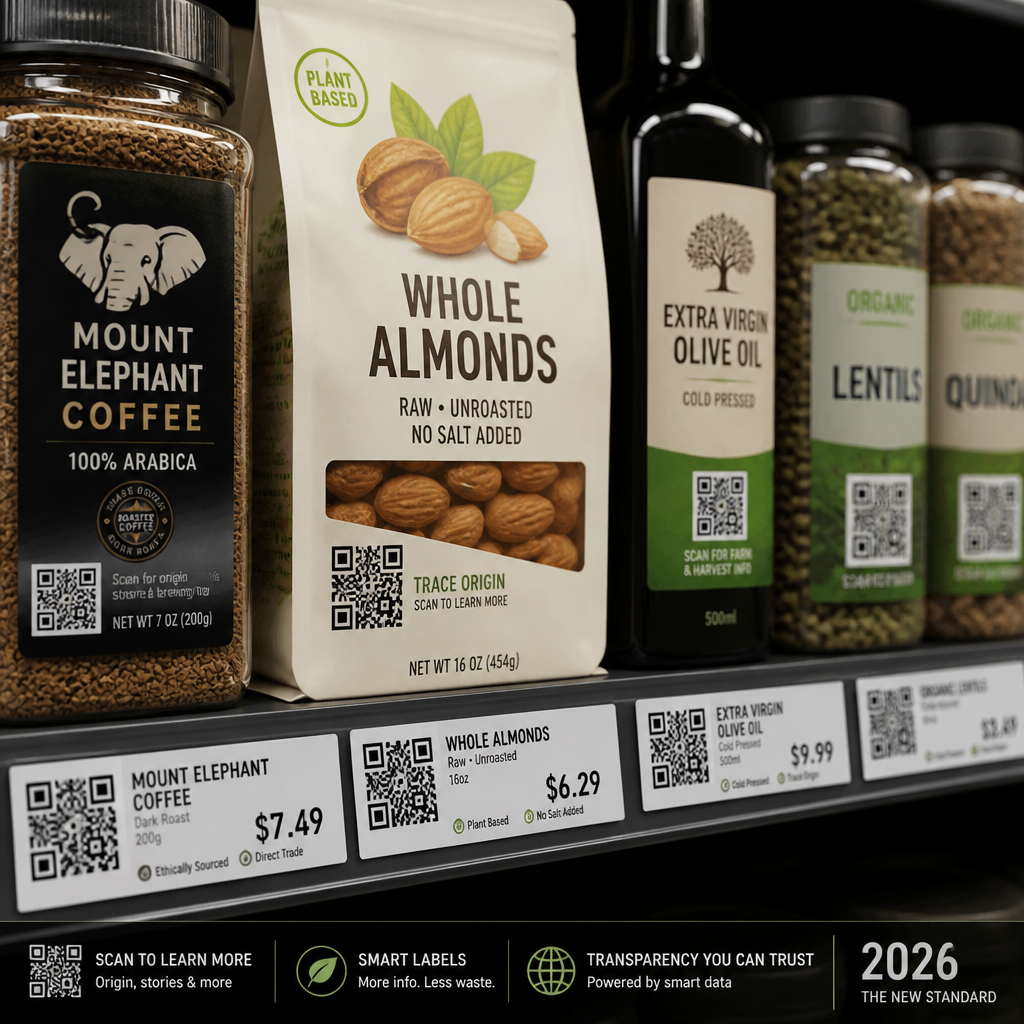
Last Tuesday, I found myself in the pasta aisle of my local supermarket, utterly fascinated by a jar of organic marinara sauce. It wasn’t the rich tomato blend that caught my eye—it was the label. Gone was the familiar, chunky barcode I’d scanned a thousand times at checkout. In its place, a sleek QR code sat next to a tiny Data Matrix symbol, promising “Scan for recipes, origin stories, and instant reordering.” As I held my phone up, I realized this wasn’t a quirky one-off. Walking through the store, I saw the same 2D codes on private-label cereals, frozen vegetables, and even the store’s own brand of tissues. The quiet barcode revolution that industry insiders have whispered about for years had finally hit mainstream retail, right here in 2026.
The Great Barcode Migration: Why Retailers Are Ditching Linear Barcodes
For decades, the familiar black-and-white stripes of the UPC barcode ruled the checkout counter. But in 2026, two-dimensional barcodes are no longer a novelty—they’re a necessity. QR codes and Data Matrix symbols have become standard on packaging, labels, and documentation across industries, from food and beverage to pharmaceuticals. The reason is simple: traditional barcodes store only a handful of digits, enough to look up a price but not much else. In a world starving for data, that’s like using a flip phone to run a smart home.
From One Dimension to Two
The shift isn’t just about cramming more information into less space—though a single 2D code can hold over 7,000 characters compared to a UPC’s 12. It’s about connectivity. A smart label today can link a physical product to the entire digital universe: nutritional facts, carbon footprint data, augmented reality experiences, and even direct-to-consumer reorder buttons. At TEKLYNX, a leader in barcode labeling software, experts now advise clients that “barcode software isn’t just something you buy; it’s a strategic investment in supply chain visibility.” Their 2026 trend report highlights how manufacturers are redesigning labels from the ground up to accommodate dynamic, scannable content.
Tesco’s Bold Move
Perhaps no single announcement shook up the retail labeling world more than when Tesco, the UK’s supermarket giant, announced they were binning traditional barcodes entirely. At NRF 2026 Retail’s Big Show Europe, Tesco detailed their full-scale embrace of QR codes on all private-label goods. Why? Because the codes let shoppers access real-time promotions, detailed allergen info, and even source-of-origin timelines with a quick scan—all while streamlining inventory management for the retailer. It was a defining moment that signaled the end of linear barcodes as we know them.
Carrefour and GS1: A Private Label Revolution
Not to be outdone, French retailer Carrefour deployed QR codes powered by GS1 across 50 of its private label products this year. These aren’t just empty squares; they’re packed with standardized data that adheres to GS1 Digital Link, a global framework that ensures every scan returns consistent, machine-readable information. For Carrefour, this means a carton of milk can tell a consumer exactly which farm it came from, while simultaneously feeding the retailer’s systems with expiration date alerts and stock-level updates. It’s a seamless blend of marketing and operations—one that relied heavily on rethinking the humble label.
Beyond the Beep: What These New Codes Can Do
If you haven’t scanned a modern retail label recently, you might be surprised by the leap forward. The new generation of barcodes isn’t just for checkout; it’s an interactive gateway. At CES 2026, retail-tech coverage highlighted QR-centric flows where shoppers pay using QR codes and then access digital receipts via QR code after purchase—no paper, no contact, no friction. But the possibilities run deeper.
Information-Rich Packaging
Imagine scanning a bottle of shampoo and instantly watching a tutorial on how to use it for your hair type, or seeing real-time reviews from verified buyers. That’s live today. For people with food allergies, a scan can flash a bold warning if a recipe has changed, something a static label could never do. Even sustainability gets a boost: a Data Matrix code on a clothing tag can trace the garment’s journey from cotton field to rack, building trust with eco-conscious shoppers.
- Instant payment and digital receipts: Scan a QR code at checkout, pay via your phone, and get a receipt in your email—no cash register needed.
- Dynamic allergen alerts: Manufacturers can update ingredient data in the cloud, so a scan always returns the latest safety info.
- Loyalty integration: A single scan can apply discounts, log points, and nudge customers toward subscription plans.
- Anti-counterfeiting: Serialized 2D codes make it easy to verify a product’s authenticity, a game-changer for pharmaceuticals and luxury goods.
Dynamic Consumer Experiences
What’s truly revolutionary is that these codes aren’t static. A QR code printed today can lead to different content tomorrow, without changing the label. That means a retailer can run a flash sale on cereal during breakfast hours, or a brand can update a product’s recycling instructions as local facilities change. This dynamic capability is why TEKLYNX and other software providers are pushing cloud-connected label design—your label becomes a live link, not just a sticker.
The Tech Behind the Trend: Industrial Printing and Labeling Innovations
None of this works without the hardware and software to print these data-dense codes reliably. The barcode labeling trends I’m seeing in 2026 revolve around three pillars: automation, RFID convergence, and smarter printer technology. At Aura Labels, we’ve had to rethink what a “label” actually is—it’s now a data carrier that might need to survive chemical washdowns, extreme cold chains, or high-speed scanning on conveyor belts.
Automation and RFID Integration
2D barcodes are increasingly printed side-by-side with Radio-Frequency Identification (RFID) tags. At distribution centers, an RFID gate can read an entire pallet’s worth of products in seconds, while the printed QR code provides granular detail when an item is handled individually. The latest barcode labeling solutions from TEKLYNX now support integrated workflows where print-and-apply systems encode RFID inlays and print 2D symbols in a single pass, slashing labor and errors.
CES 2026 and the Future of Barcode Printers
Walking the floor at CES 2026, I saw label printers that would make any supply chain manager’s heart race. Compact desktop units now produce photo-quality QR codes with embedded security features like microtext or invisible UV layers. Industrial models boast speeds of 14 inches per second while handling materials from adhesive vinyl to static-cling films. One demo that stuck with me: a retailer printing shelf-edge labels with dynamic pricing that updates via e-ink and includes a scannable QR code for product details—all controlled from a smartphone app.
Barcode Software Evolution
Behind every crisp code is powerful software. The 2026 trend report from the barcoding industry emphasizes that companies aren’t just buying off-the-shelf label design tools anymore; they’re investing in platforms that connect to ERP systems, validate data in real time, and ensure compliance with global standards like GS1. As Doug Niemeyer from TEKLYNX puts it, adapting to this year’s trends means embracing “software that thinks ahead—anticipating regulatory changes in food & beverage or unique UDI requirements in healthcare.” For small businesses, that might sound intimidating, but the right partner can make it plug-and-play.
What This Means for Small Businesses: A Practical Takeaway
If you’re running a small retail brand, you might wonder whether all this innovation is out of reach. It’s not. In fact, the shift to 2D codes levels the playing field. With a few smart labeling choices, a craft soap maker can deliver the same rich digital experience as a multinational giant. But you need to start now, before customers expect it.
Choosing the Right Labels for 2026
The label material and adhesive matter as much as the code itself. A scannable QR code on a frost-covered frozen food bag is useless if the label peels off. Look for:
- Durable synthetics: Polypropylene or polyester labels that survive moisture, oil, and abrasion.
- 2D code type: QR codes are best for consumer engagement, while Data Matrix excels in small spaces or direct part marking.
- Dynamic QR codes: Opt for printed codes linked to a redirect URL, so you can update content without re-labeling your products.
- GS1 compliance: If you plan to sell through major retailers, ensure your codes follow GS1 Digital Link standards to avoid costly rejections.
At Aura Labels, we’ve helped dozens of indie brands make the switch. One client, a boutique hot sauce company, moved from a basic barcode to a vibrant QR code label that links to recipe videos, their social media, and a “hot sauce of the month” subscription. Sales jumped 27% in three months—not because the sauce changed, but because the label started a conversation.
The practical takeaway? Don’t wait until your retailer forces the upgrade. In 2026, the barcode