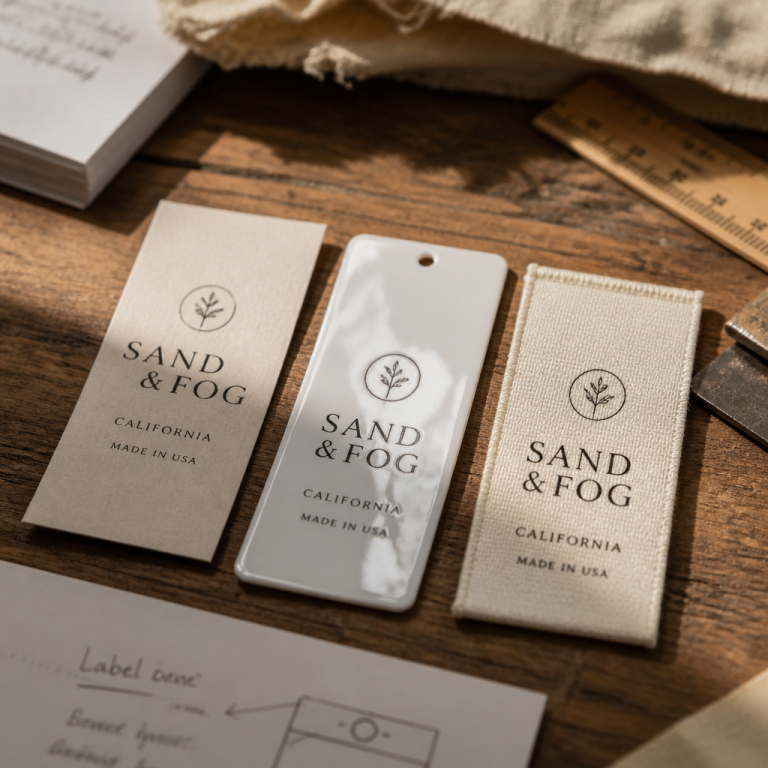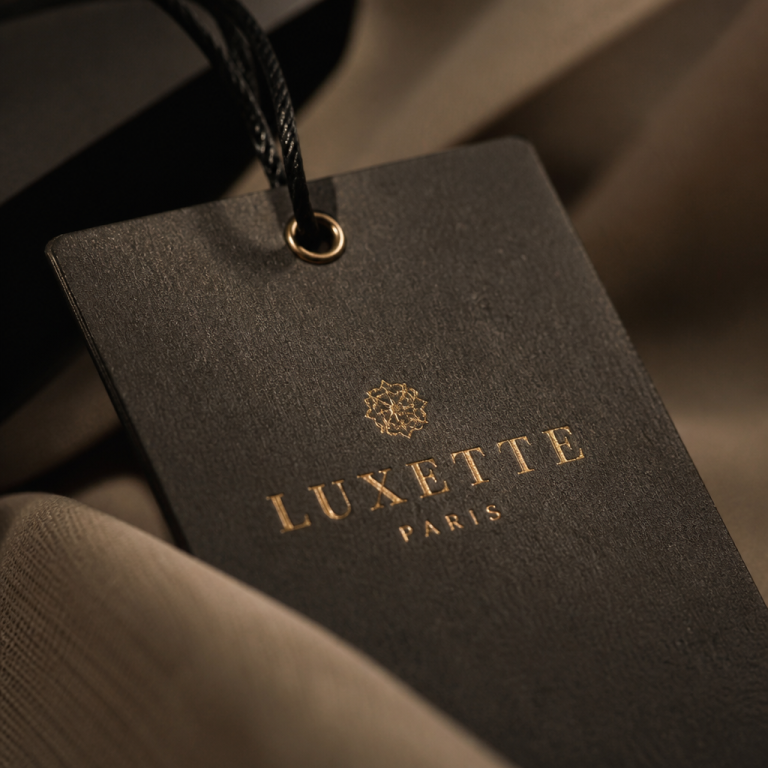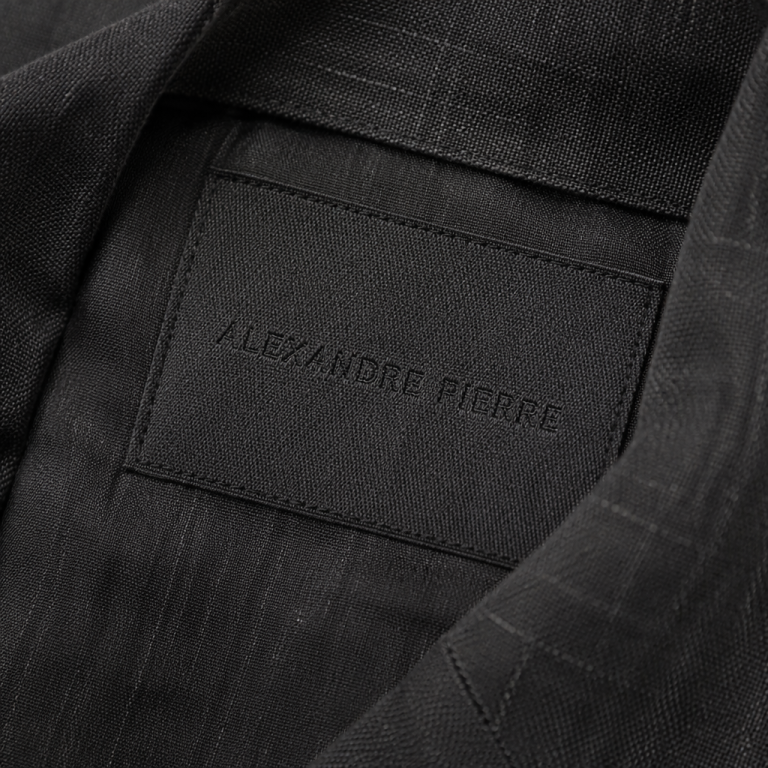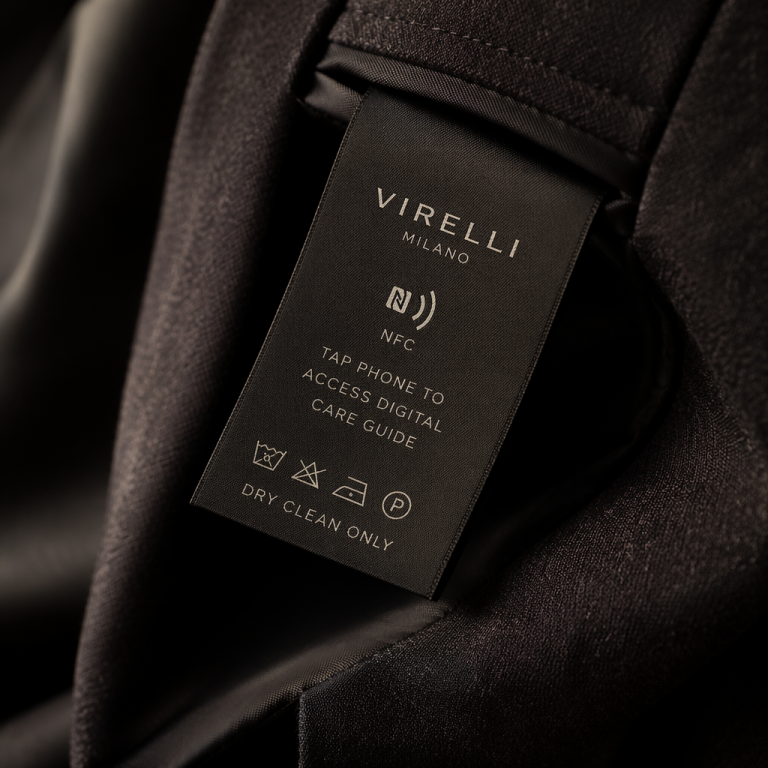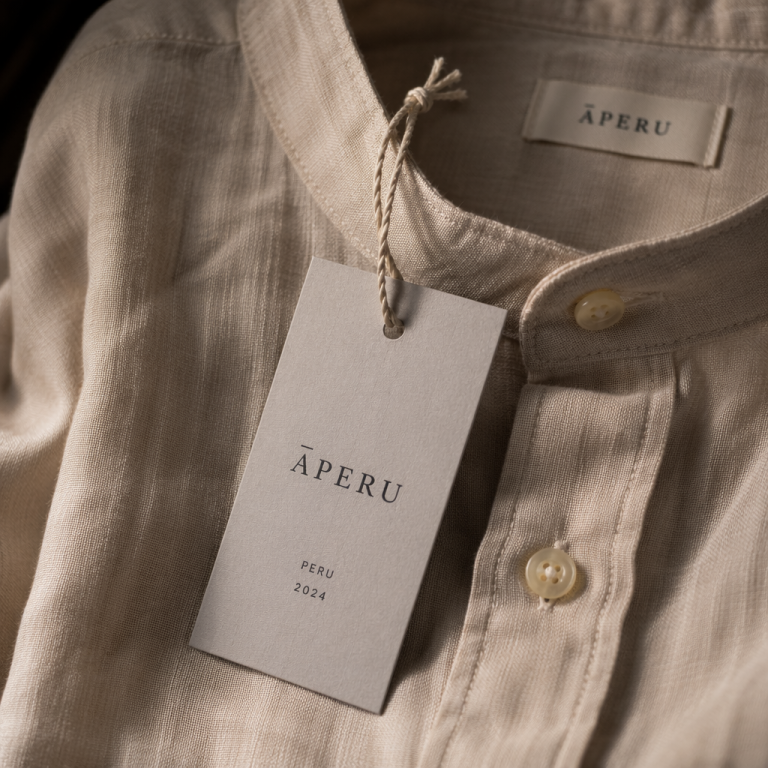
The other day, I pulled a hand-knit sweater off a sample rack and didn’t even look at the stitches first. My fingers went straight to the back of the neck — right where the label lives. It was a soft, off-white cotton twill, hand-stitched at the edges, with the brand’s name in a tiny serif font that looked like it had been letterpressed by someone’s grandmother. I thought, these people care. Not just about the garment, but about how it meets the person who wears it. That’s the moment I knew I had to sit down and write about labels, for all the independent designers out there who might think of them last.
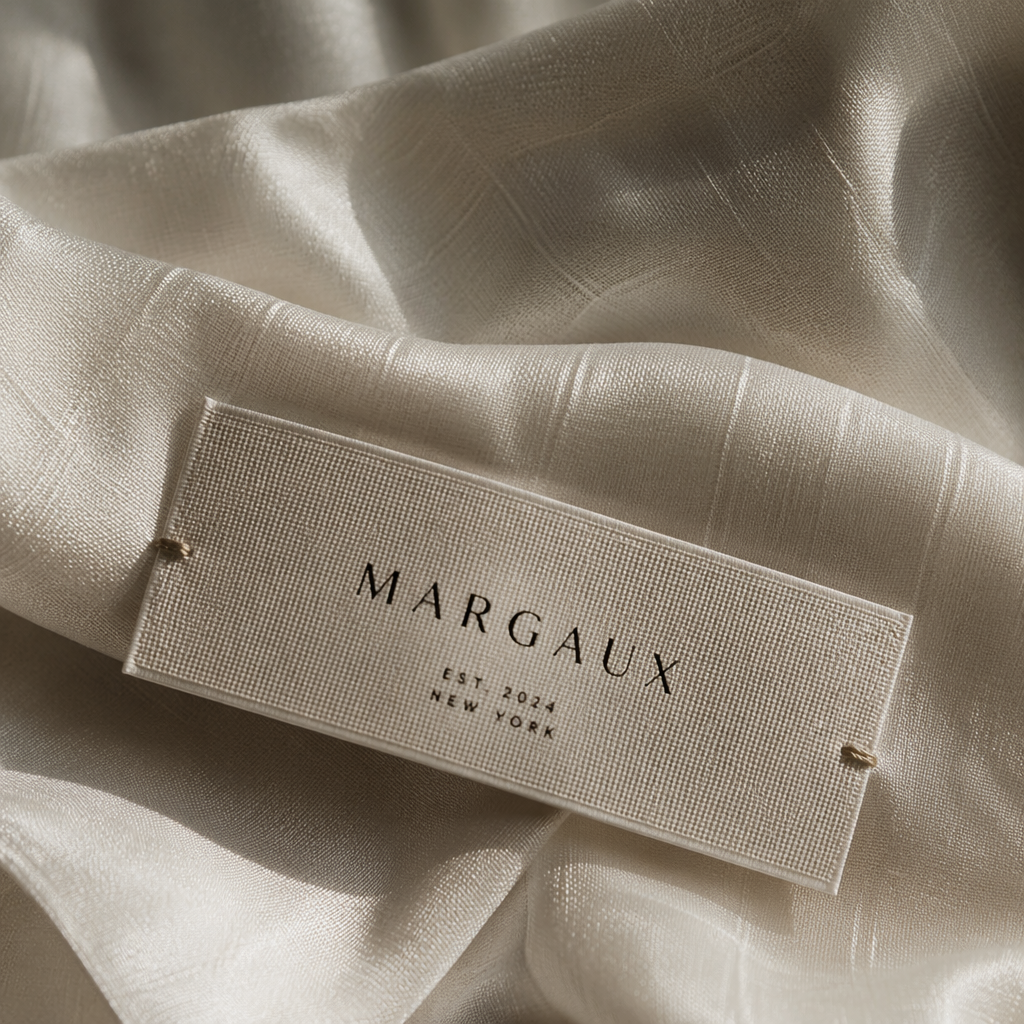
I get it. When you’re launching a clothing brand, your brain is full of fabric weights, pattern grading, shipping costs, Instagram reels. The little tag sewn inside the back seam feels like an afterthought, maybe even an annoying one. “I’ll just get some printed satin ones off Etsy and move on.” But here’s the thing: for a small brand, the label isn’t a footnote — it’s often the first tactile conversation you have with a stranger. And if you’re running an independent label, that conversation better be honest.
The Label Is Your Handshake
Think about how someone meets your clothes in real life. They browse a rack or scroll a website, something catches their eye, they reach for the piece. Before they try it on, they do this tiny ritual: they flip the neckline, glance at the composition tag, maybe rub the main label between their fingers. In two seconds, they’re deciding whether this thing has substance. A scratchy polyester tag that screams “fast fashion” sows doubt, even if your dress is beautifully made. A soft woven label, with texture and a bit of soul, does the opposite. It whispers, “Someone planned this.”
I remember buying a secondhand shirt from a long-defunct indie brand solely because of the label inside — a frayed linen piece of fabric with a hand-drawn moon and the words “made for wandering.” I still have that shirt a decade later, the garment long faded. The label kept the story alive. That’s the kind of quiet power you’re paying for, and it costs surprisingly little.
Don’t Just Print, Tell a Story
Your label doesn’t need to shout. The best ones don’t. They offer a small truth about the clothes they live in. Look at what BODE does: Emily Bode’s labels are sewn in like little historical documents — hand-embroidered numbers, vintage-feel typography, sometimes a note about the deadstock fabric’s origin. That tag becomes part of the garment’s biography. On the younger, more playful end, Paloma Wool slips printed paper hangtags into every piece that double as tiny art cards. People pin them to mood boards, stash them in sketchbooks. Neither brand treats the label as an obligation; they treat