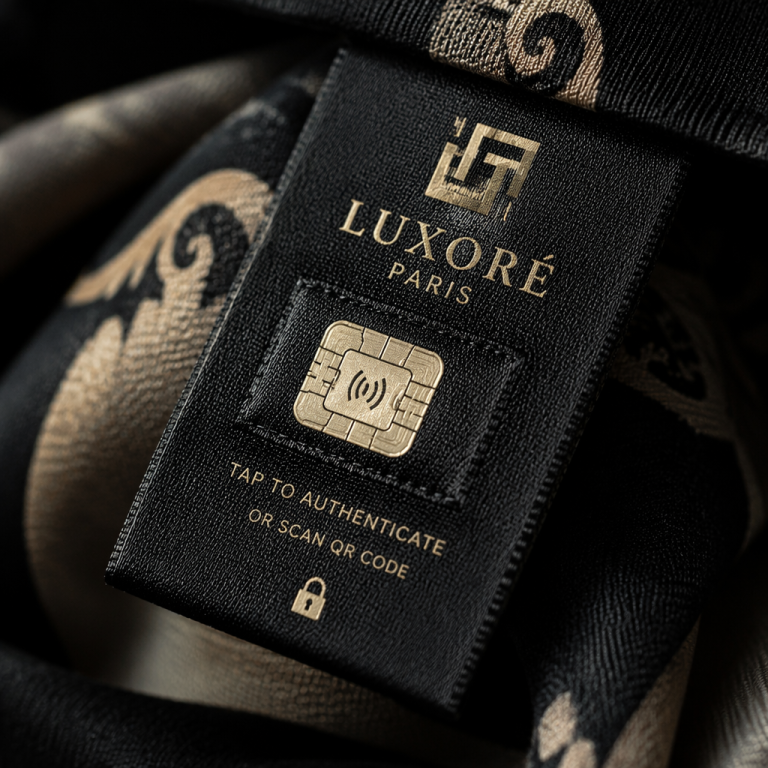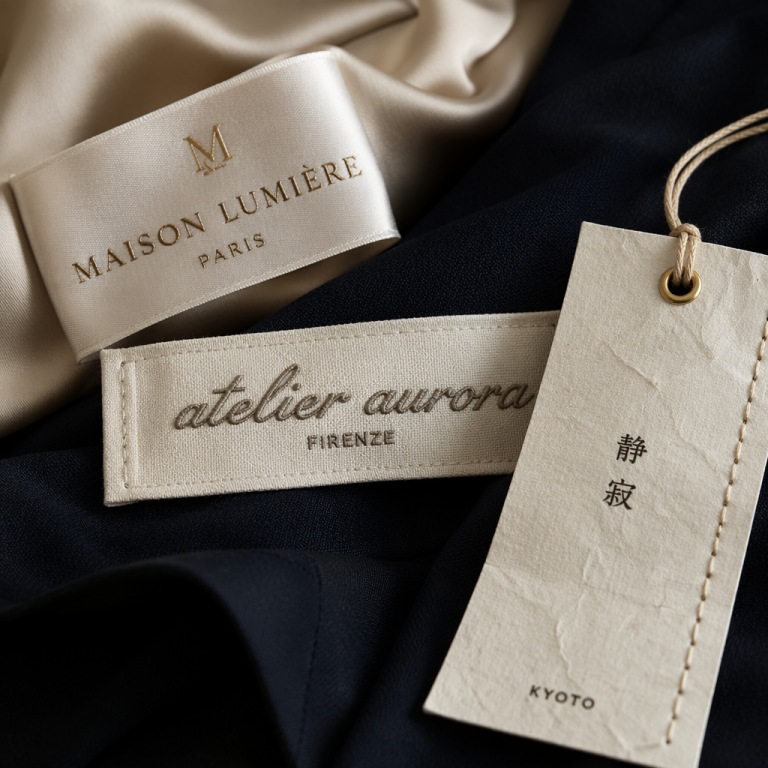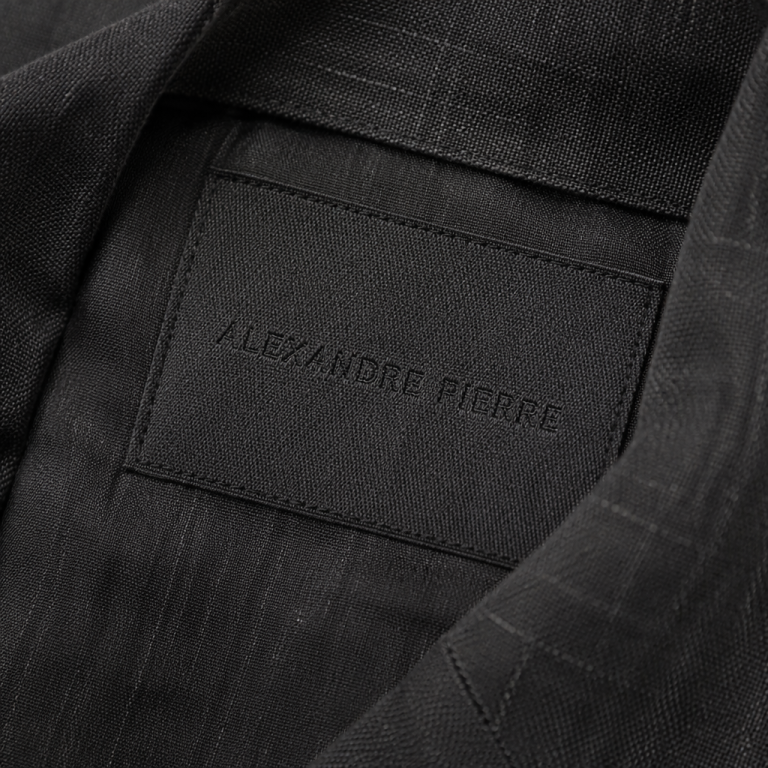
Last week, in the hushed calm of a concept boutique on Milan’s Via della Spiga, I found myself doing what any label obsessive would: I turned a whisper-weight silk organza blouse inside out. The care tag was a thing of quiet beauty—a sliver of French ribbon, the letterpress in dove-grey ink so faint it felt like an understatement. But what stopped me was a small, almost invisible circle, no larger than a coin, sewn just behind the main brand label. It had no text, no care symbols. Just a faint metallic shimmer and the delicately woven outline of a radio wave. The shop assistant noticed my curiosity. “Tap your phone,” she said. And suddenly, the garment began to speak.
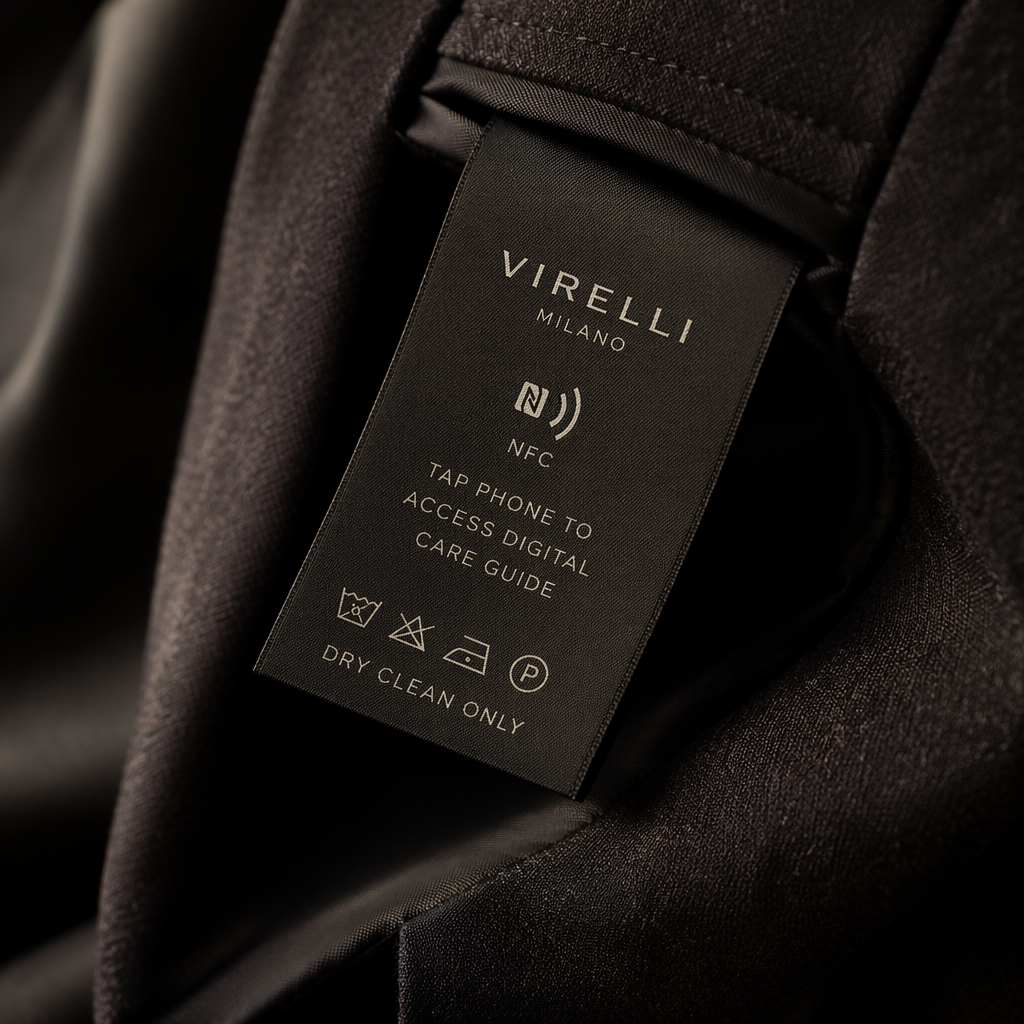
What unfolded on my screen wasn’t a product page but a passport: the exact provenance of the silk, the atelier that cut the pattern, a short note from the designer about the mood that shaped the collection, and—crucially—a cryptographically sealed authentication certificate. In one tap, the label had transformed from a passive textile into a portal. That moment crystallised something I’ve been sensing across mid-to-high-end fashion for a while now: the quietest, most potent revolution isn’t happening on the runway. It’s happening inside the label itself.
The Shift from Static to Smart
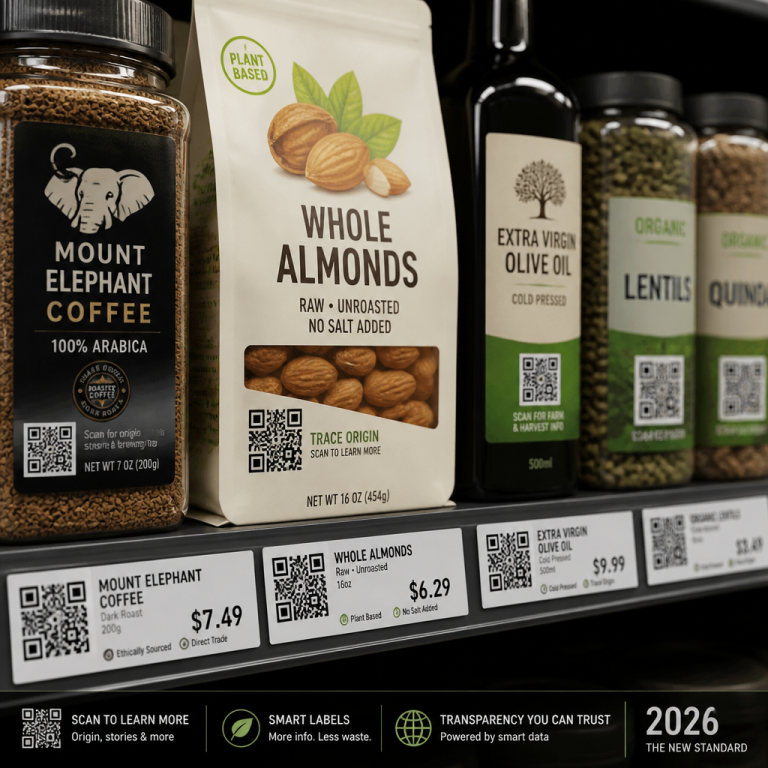
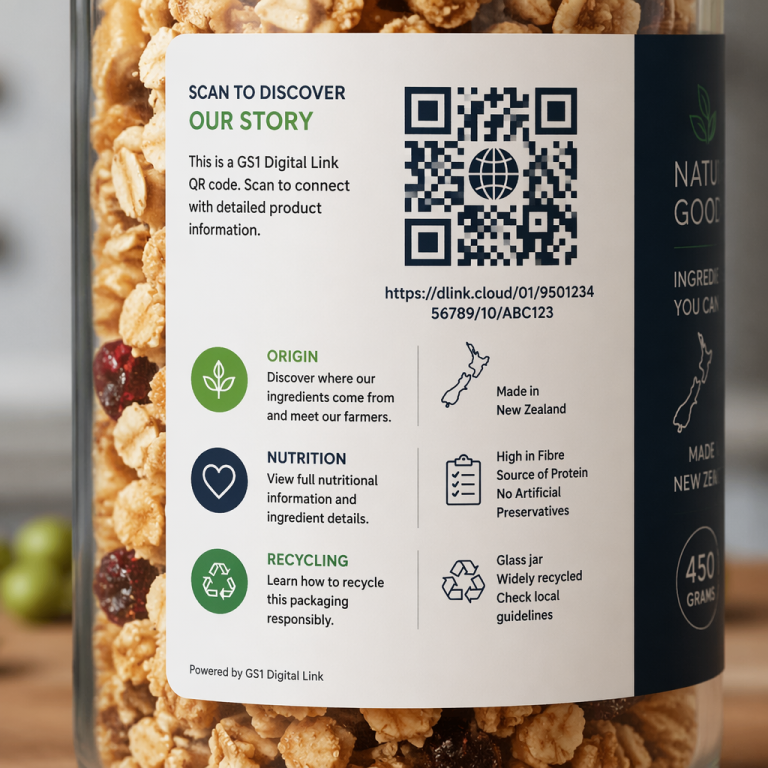
For over a century, the clothing label has been a one-way communication: brand name, fibre content, country of origin, care instructions. A static roster of facts. But when you embed an NFC (Near Field Communication) chip or a QR code into that same humble strip of fabric, the label gains a voice—and more importantly, a memory. NFC technology, already familiar to many through contactless payments, allows a smartphone to read a tiny encrypted inlay by simply hovering over it. No app, no scanning. That short-range, one-tap interaction is becoming the luxury sector’s new favourite tool for bridging the physical and the digital.
Why now? The counterfeit crisis has a lot to do with it. A 2024 report from the EU Intellectual Property Office estimated that nearly 5% of all imports into the EU are fake goods, with clothing and accessories consistently topping the list. For a Maison, a faked bag or a copied knit isn’t just a loss of revenue—it’s an erosion of the intangible aura that commands a four-figure price tag. Traditional holograms and serial-numbered cards can be duplicated with alarming ease. An encrypted NFC inlay, on the other hand, can be linked to a unique digital twin on a blockchain, creating a tamper-proof story that begins at the raw material and follows every stitch.
The market is responding with staggering speed. Industry data suggests that the global market for NFC and QR-enabled consumer-facing smart labels swelled from around $6.1 billion in 2022 to nearly $8.9 billion in 2025, with apparel and luxury goods driving a significant chunk of that growth. This isn’t a fleeting tech gimmick; it’s the new infrastructure of trust.
Authentication as an Experience
Where the technology gets truly interesting—and where fashion insiders need to pay close attention—is in the shift from authentication as a forensic chore to authentication as a brand experience. When I tapped that organza blouse in Milan, I wasn’t asked to scrutinise a hologram or enter a serial code. I was gifted a story. The designer had used the NFC chip to share a voice memo about the fabric’s origin, a short film of the silk mill at dawn. The authenticity check felt like a private behind-the-scenes tour, deepening my emotional connection to the piece before I even reached the cash desk.
This reframing is crucial. The most forward-thinking labels I encounter—ranging from heritage maisons like Loro Piana to nimble independent brands—are using smart labels to turn a functional necessity into a point of differentiation. A customer who taps a cashmere sweater and instantly sees the Mongolian herder cooperative that supplied the fibres, complete with a sustainability certification, is no longer just buying a garment. She’s buying into a transparent value chain. In an era where luxury consumers increasingly demand accountability, that digital handshake becomes a form of quiet luxury in its own right.
What can a luxury NFC label deliver beyond authentication? In the conversations I’ve had with brand founders and creative directors, the list keeps growing:
- Digital product passports that comply with emerging EU regulations and offer full lifecycle traceability.
- Care guidance that adapts—imagine tapping the label a year later and seeing a gentle reminder to hand-wash in cold water, or a short video on how to remove a stain from silk.
- Exclusive content such as styling suggestions from the atelier, early access to the next capsule, or invitations to private events, all triggered by the garment you already own.
- Re-commerce empowerment: a verified digital twin allows a pre-owned luxury piece to be authenticated on resale platforms, preserving value and extending the garment’s life.
- Direct-to-consumer connection: a tap can open a direct line to a concierge service or a personal stylist, bypassing app downloads and clunky QR scans.
It’s a model that turns the label into a loyalty programme stitched into the hem, without ever screaming for attention.
Designing the Invisible Interface
For the independent designer or boutique owner reading this, the instinct might be to recoil at the thought of a clunky plastic tag intruding on the tactile poetry of a hand-finished garment. I felt the same until I started seeing how thoughtfully the technology is being woven in. The most elegant implementations I’ve witnessed—at a Parisian showroom for a knitwear label, at a London-based modern tailoring brand—use ultra-thin NFC inlays bonded onto fabric, then covered by the brand label or a signature colour welt. The chip is invisible, weightless, and washable up to industrial standards. It can be sewn into the care label, tucked behind a leather patch, or even woven directly into a hem using conductive yarns developed by textile firms like Primo1D.
This is where the real craft lies: not in the tech itself, but in how it’s hidden. The luxury customer should never notice the NFC element; they should discover it—ideally through a subtle icon embroidered on the care tag that hints at something more. When I recently visited a small atelier in Antwerp, the designer placed the NFC behind a silk label printed with a single dot, a visual