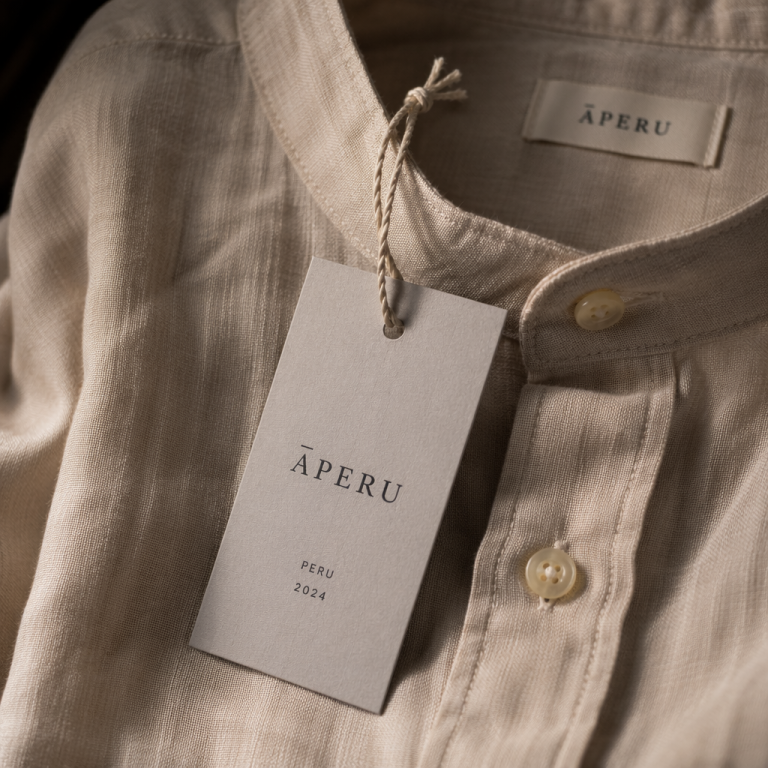
Last month, I was in a Parisian concept store, the kind where the air smells of sandalwood and the clothes hang like art. My attention fell on a rack of linen blazers. The tailoring was impeccable, but before I even checked the price or the country of origin, my fingers found the hang tag. It was thick, with a soft-touch laminate, letterpressed in a dusty rose, and attached with a raw cotton cord. I turned it over and there, debossed into the back, was a tiny line of poetry. That swing ticket didn’t just tell me about the blazer – it whispered the brand’s entire story. It’s moments like this that remind me why, in premium fashion, the hang tag is never just a bit of card. It’s the final, deliberate stitch in the garment’s narrative, and retailers ignore its potential at their peril.
The Anatomy of a First Impression
In a boutique, a customer’s hand reaches for a hang tag often before they touch the fabric. That split second is a test. Does the tag feel substantial, or flimsy and disposable? For luxury and premium brands, the tactile experience is non-negotiable. I’ve seen designers like Gabriela Hearst and The Row treat their swing tickets as miniature extensions of the garment itself. The weight, the edge, the sound it makes when it flips – all of it communicates intention. When you’re competing in a market where a silk slip dress might retail for €800, a generic, off-the-shelf tag with a glossy sheen and a plastic string can undo a customer’s trust faster than a loose hem.
Consider the hierarchy of touchpoints: the shop window draws the eye, the fabric draws the skin, but the hang tag often seals the deal. It’s the element that literally connects the garment to the brand’s identity. This is why I always advise independent designers to think of custom hang tags not as an afterthought – a grim rush just before a trunk show – but as a core piece of the collection’s packaging language. It should be designed in parallel with the line plan, not delegated to an intern with a paper sample book.
Beyond Card: Materials, Finishes, and the Art of Subtlety
There’s a quiet revolution happening in what we call “paper” goods. The most compelling custom swing tickets I encounter now owe more to art bookbinding than to commercial printing. The options have become deliciously tactile, and getting them right means curating a sensory experience that aligns with your price point.
The Foundation: Paper Stocks That Speak
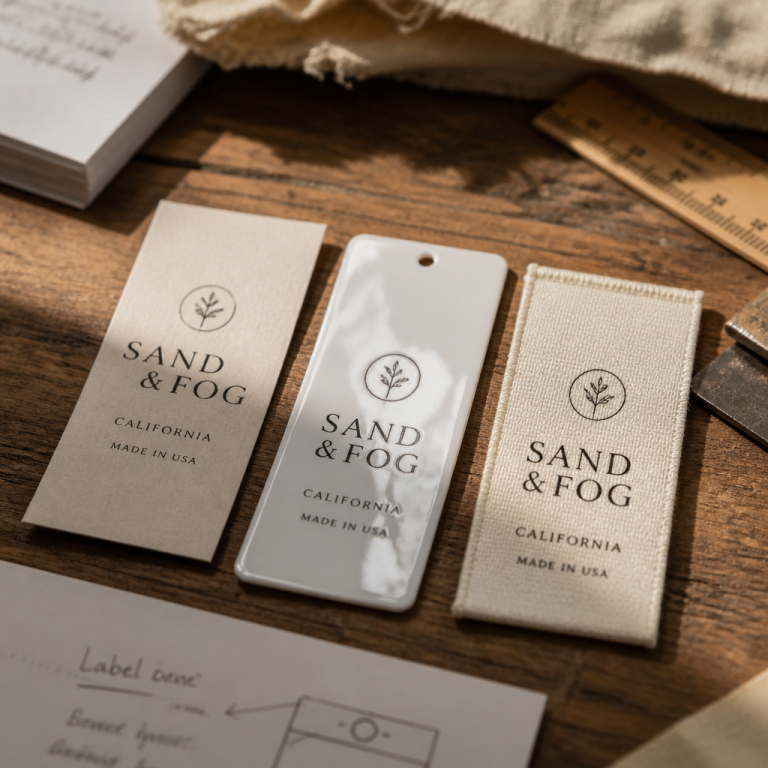
When a brand like Lemaire creates a hang tag, you feel the pulp. Uncoated, textured stocks – think cotton rag, kraft, or bamboo blends – immediately read as considered, sustainable, and quietly luxurious. They invite touch without screaming. Conversely, a thick, coated stock with a smooth, almost waxy finish can suggest modernity and precision, perfect for a crisp shirting brand like Brioni. But the real magic comes in the layering. I recently held a tag that was a duplex of pale grey kraft on one side and bright white uncoated on the other, held together with a near-invisible adhesive. It was a detail only the most curious customer would discover, and that’s exactly the point.
Metal, Embossing, and the Ghost of Craft
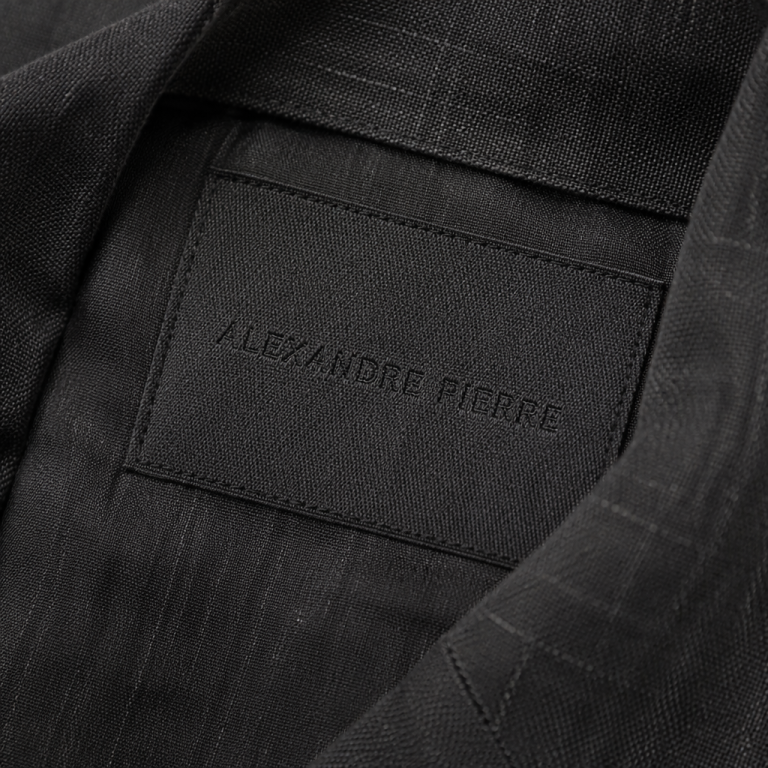
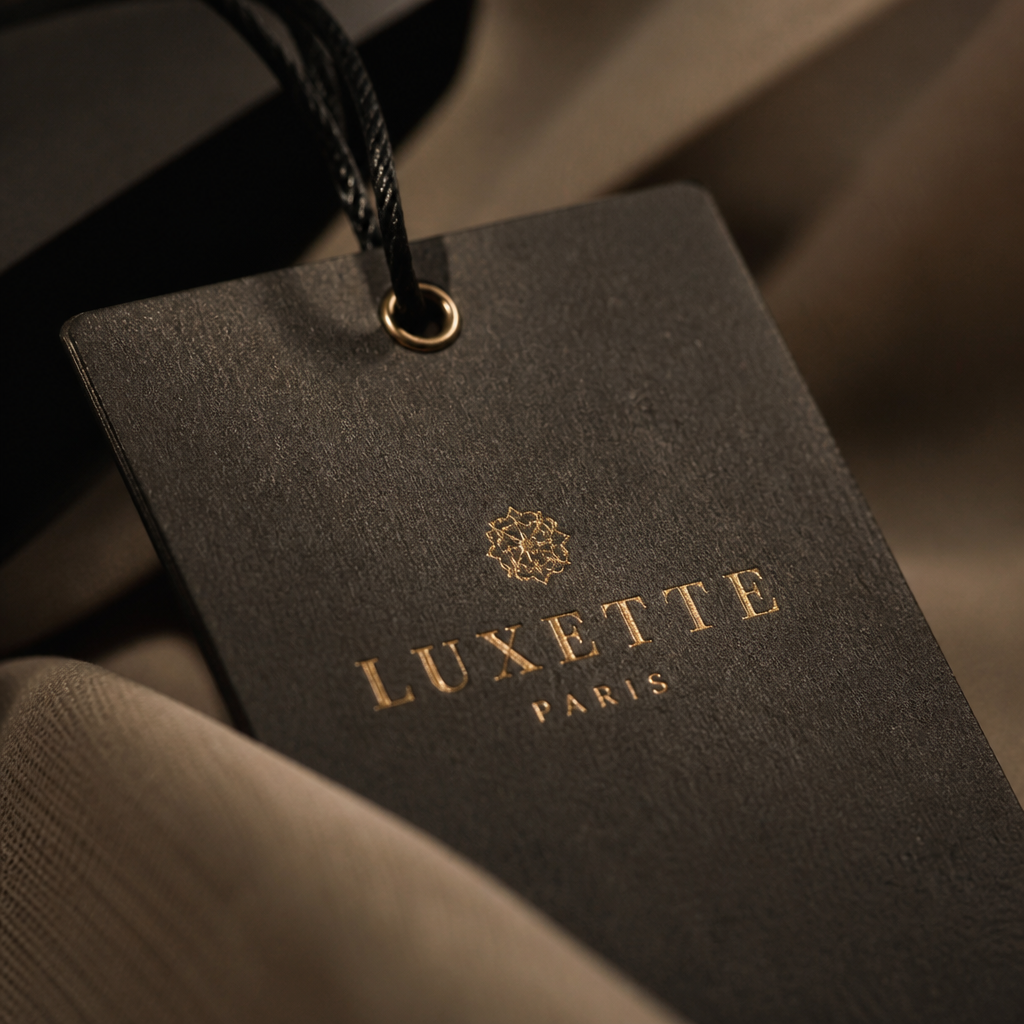
Finishing techniques transform a flat rectangle into a keepsake. Foil stamping in matte gold or copper is the most visible signal, but it’s the understated ones that hold sway among insiders. Blind debossing – pressing a logo or motif into the card with no ink – creates a shadow effect that relies on depth and light. I’ve seen this used beautifully by niche London-based labels who want their branding to be felt, not read. Then there’s the delicate art of edge painting: a flick of deep burgundy or charcoal on the tag’s perimeter that echoes the lining of a jacket. These touches tell a story of craft continuity. Even the choice of string or attachment matters. A waxed cotton cord, a silk ribbon, a miniature safety pin, or a brass eyelet each carry vastly different brand connotations. A safety pin whispers punk heritage; a silk ribbon murmurs boudoir intimacy. Which narrative is yours?
From Shelf to Wardrobe: Designing for the Post-Purchase Journey
A hang tag’s job isn’t finished at the cash wrap. I keep a box of beautiful swing tickets I’ve collected over the years, and I’m not alone. Many customers repurpose them as bookmarks, inspiration board items, or even gift tags. This afterlife is a goldmine of passive branding. When you design a custom hang tag that’s too beautiful to discard, you create a brand ambassador that lives in someone’s personal space. It’s why a designer like Dries Van Noten often incorporates botanical prints or archival patterns onto his tags – they’re miniature pieces of the collection’s soul. To encourage this, think about the practical but elegant inclusion of information. Barcodes and care instructions can live on a smaller secondary tag, a peel-away sticker, or the back of the main ticket, leaving the front as a clean canvas for your logo or a seasonal graphic.
Here’s where I see ambitious indie brands elevate their game: they use the tag space to share something unexpected. A snippet of a poem, the coordinates of the atelier, a thank you in the designer’s handwriting, or even a single-use discount code for a future purchase, beautifully typeset. This turns the tag into a conversation starter and a relationship builder. It’s a tangible connection in an increasingly digital world, and for luxury customers who value story and provenance, it’s more persuasive than any Instagram ad.
Practical Brilliance: What to Specify and What to Avoid
After years of watching brands fumble this final step, I’ve gathered a few non-negotiables that bridge the gap between dreamy design and real-world execution.
The essential checklist for a premium swing ticket:
- Size and proportion: A tag that dangles below the hemline on a blouse looks chaotic; one smaller than a business card on a chunky knit gets lost. Sample the tag on the actual garment, on a hanger, and adjust. The average luxury tag falls between 35mm x 70mm and 50mm x 90mm, but I’ve seen beautifully elongated 20mm x 120mm strips on minimalist Scandinavian labels.
- Shape and die-cutting: A simple rounded rectangle is timeless, but a custom die-cut silhouette can become a brand signature. Think of the clean, arched top of a classic Le Labo label adapted to a hang tag. Avoid overly complex cuts that will tear easily at the string hole.
- Attachment method: If you opt for a loop of ribbon or string, its length determines how the tag sits. Too long, and it tangles with other garments on a rail; too short, and it’s hard to read. A 15-20cm loop is forgiving. If using a safety pin, invest in a high-quality pin with a smooth closure – a snagging pin can ruin a delicate knit.
- Readability and hierarchy: Even the most sumptuous tag must communicate quickly. Use no more than two font families, and ensure the garment size and country of origin are legible from a foot away. Foil on a soft white stock can be hard to read under boutique lighting; test it.
- Durability: Your tag will travel: from factory to distribution center, then be handled by stockists and customers. A matte lamination can protect the surface, but some designers prefer the raw, scuffable patina of naked paper. Just make sure the string hole is reinforced with an eyelet if the stock is soft, or it will rip on day one.
Common traps: overcrowding the tag with legal compliance text, using a paper weight that fights with the garment’s drape, or choosing a finish that contradicts your sustainable message (e.g., a heavy plastic laminate on an organic cotton piece). And a personal plea: avoid the cheap, shiny plastic “string” that looks like it came off a parcel. It’s the quickest way to cheapen a piece you’ve spent hundreds of hours perfecting. Instead, use cotton, hemp, or even a thin strip of the garment’s own fabric as the tying element.
Ultimately, the custom hang tag is the punctuation at the end of your brand’s physical sentence. For premium clothing retailers and independent designers, it’s a minuscule billboard, a tactile handshake, and a gift all in one. The next time you’re about to sign off on a production run, pick up your prototype tag. Hold it. Turn it over. Does it feel worthy of the work you’ve poured into the garment? If there’s even a whisper of hesitation, it’s not finished. A perfect swing ticket doesn’t announce itself; it simply makes the whole piece feel more valuable, more resolved. And in the quiet of a fitting room, that’s what turns a browser into a buyer.